By Sheena Isaac
The Trust’s Darwin Plus projects are proactively utilizing citizen science to assist with data collection, keep the community informed, and also get community buy-in for our invasive species reduction and control projects.
Citizen science helps to fill gaps in data collection by incorporating volunteers in the monitoring process and providing an opportunity for the public to share their observations and other useful information.
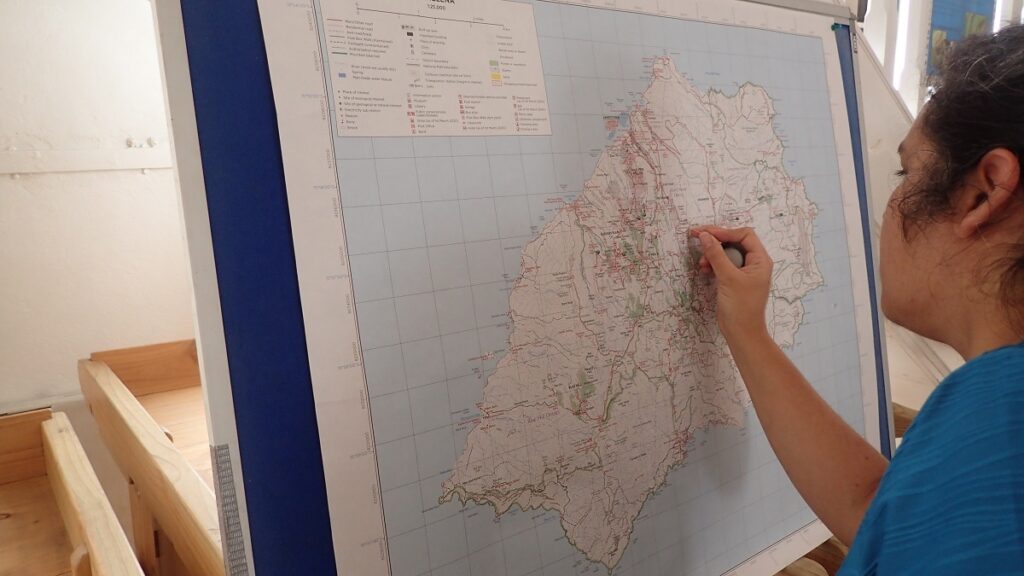
Citizen science is helping the Invasive Invertebrate project to more accurately map the species distribution and abundance of project’s target species: the common wasp, the big-headed ant, and the praying mantis.
So far, the team have asked the public for location sightings for the common wasp in order to begin trialling control methods. However, despite sighting data being submitted, the trials were hindered by the recent colder weather with low wasp activity. It is hoped that observations and sightings can continue when the temperatures rise.
With the appearance of the big-headed ant and the praying mantis the team are also now looking for public feedback on the distribution of this species.
Public survey data indicates that there is low interest in endemic or invasive ‘bugs’, so we need to address this. We hope to increase the number of volunteers with continued information sharing about the species’, methods being trialed and project progress overall, via local and social media.
By disseminating our findings, the public will start to see the benefits of their input and also have a better understanding of the choices of control methods used.