By Sheena Isaac
We are pleased that our island children are learning about our amazing collection of invertebrates. Around 30% of the endemic species of the UK and its Overseas Territories are found on St Helena – that includes over 400 endemic invertebrates!
This term we have been working with schools on their invertebrate education. Teachers are using the Invertebrate File we produced under our previous Darwin Project, ‘Bugs on the Brink’, making lessons as local as possible.
Year 5 incorporated local bugs into their science classification unit with the observation of preserved samples and use of keys in their identification. Year 1 classes learnt about animals with a focus on creepy crawlies for their science lessons; we supported schools by facilitating bug hunts and providing additional resources. An exciting topic that got pupils exploring the outdoors!
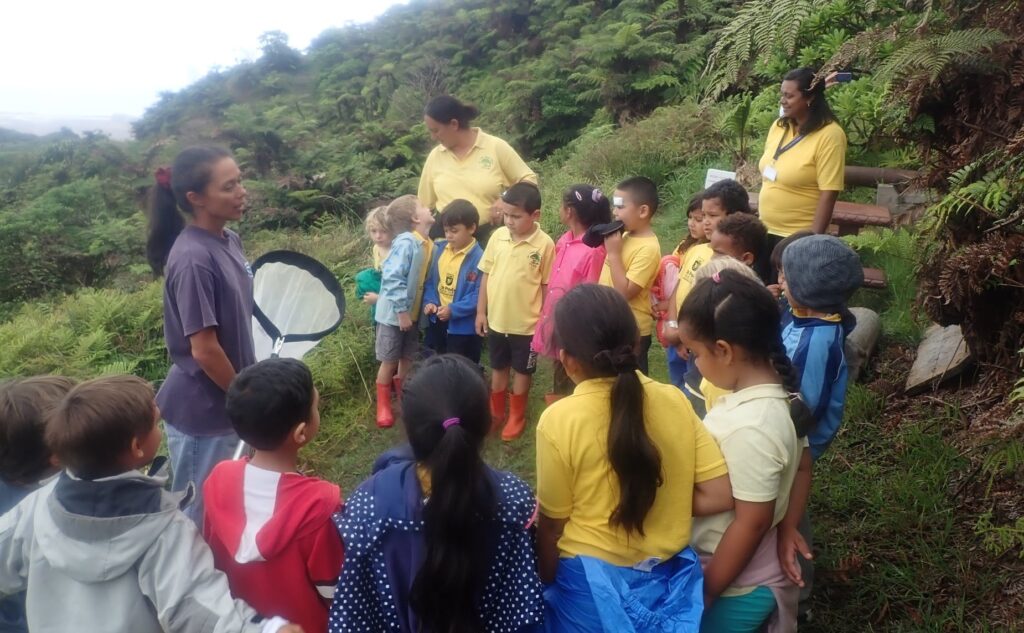
This year, alongside of the Millennium Forest bug hunt, teaching staff felt confident enough to take groups to Diana’s Peak. This provided the perfect comparison from dry land and wet land plant and bug species. This was a new experience for some pupils, the first time for some children to Diana’s Peak!
The classes recalled how to use the pooters and practiced using a sweep net, they were showed the safe way of collecting and releasing bugs. After collecting specimens, they practised identification. Children saw common endemic species like the Blushing Snail (Succinea sanctaehelenae) to the rarer Vulture Leafhopper (Nehela vulturina) and Jellico Flea Beetle (Longitarsus mellissi) at Diana’s Peak and the Gumwood Leafhopper (Sanctahelenia decellei) at Millennium Forest. A special experience indeed! Although, the class were equally happy catching button worms and woodlice!